
Hypnotherapy, without the mystery.
I have been a hypnotherapist since 2014. It is where my therapy work began, and it still runs through most of what I do. If you have come looking for hypnotherapy specifically, this is the page for you.

What hypnotherapy is
Hypnosis is a state of relaxed, focused attention, a bit like being absorbed in a book or arriving somewhere without remembering the drive. In that state the mind is more open to helpful suggestion and less caught up in its usual patterns. Hypnotherapy uses that state to work on the things you want to change.
It is not what you have seen on television. You stay aware, you can hear everything, you can stop at any time, and you cannot be made to do or say anything you would not choose to. Most people find it pleasant and are surprised how ordinary it feels.
Hypnotherapy, in more detail
What a session feels like
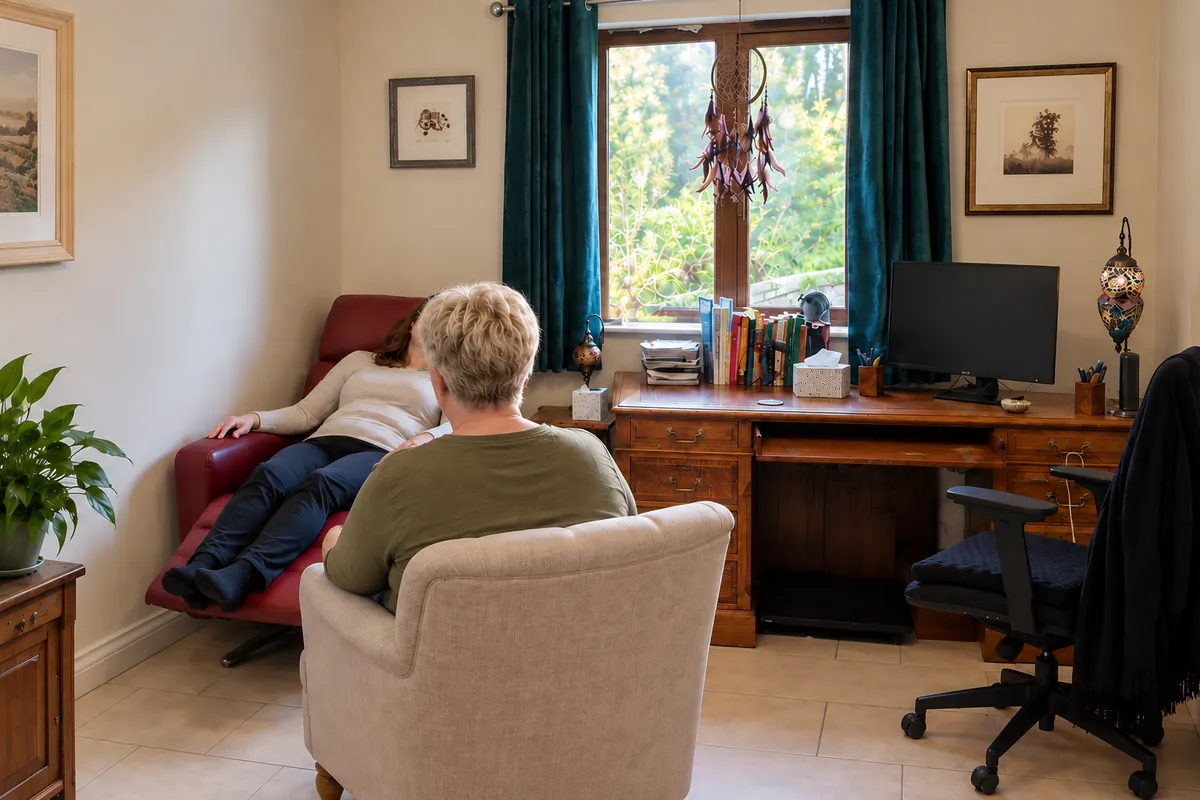
We talk first, about what has brought you and what you would like to be different. Then you settle into the chair and I guide you into a relaxed, focused state; most people describe it as pleasantly heavy, or like the moment before sleep while still fully awake. In that state we work with suggestion, imagery and the parts of you that are doing the worrying.
You will hear everything, remember everything, and come back to the room feeling rested. Sessions are one hour.
How many, and how quickly
Some things, like a specific fear or a habit, can shift in two or three sessions. Sleep and stress usually take a little longer. Longstanding patterns take longer still, and I will tell you honestly what I think is realistic at the first call.
You will always be given techniques to use between sessions. The aim is for you to need me less, not more.
Where it sits with everything else
Hypnotherapy works alongside medical treatment, not instead of it. It is safe to combine with most prescribed medication, and a good hypnotherapist will say if your GP should be involved.
It blends naturally with counselling and parts therapy, so if the work begins with one approach and another would help more, the course can change without starting again.
What hypnotherapy can help with
Hypnotherapy is rarely used on its own. It works best blended with counselling, parts therapy and other therapeutic techniques, so that the work reaches the underlying issue and not just the symptom. It sits comfortably alongside medical treatment, and never replaces it.
Hypnosis itself is simply a state of deep, focused relaxation. You stay aware throughout, you can hear everything, and you remain in control. Nothing happens that you have not agreed to, and most people describe it as calm and restful rather than strange.
Sessions are one hour. The first includes an introductory relaxation under hypnosis, so you know what it feels like before going any further.
Beyond anxiety, trauma and study, it can help with
- Stress and overwhelm
- Sleep
- Confidence and self-doubt
- Habits you want to change
- Fears and phobias
- Performance, from public speaking to sport
- Irritable bowel syndrome and other mind–body conditions
Where hypnotherapy fits
On its own
For stress, sleep, habits, confidence, fears and performance. Usually a few sessions, with techniques you keep.
With anxiety
Hypnotherapy alongside counselling, one to one, on the patterns that keep anxiety going.
Within trauma counselling
EMDR incorporating hypnosis lets processing happen from a calm, focused state.
Not on the list?
If what you are dealing with is not on this page, get in touch anyway. The 20-minute call exists so we can work out together whether it is something I can help with.
Curious whether it would work for you?
Book a free 20-minute call. I will explain how I would approach what you have brought, and you can decide from there.